Over this past summer I read Nilsson: The Life of A Singer Songwriter, which I had eagerly anticipated.
It’s the first full length bio of Harry Nilsson, a very underrated and virtually unknown recording artist from the late 1960’s and early seventies. Written by Alyn Shipton, the book does indeed chronicle Nilsson’s entire life in detail, and yet after reading I feel like I’m not that much closer to really knowing the man.
This is perhaps not a failing of the book, but rather a quality of the person- a true Gemini: While being one of the best contemporary vocalists in rock and roll, Nilsson remains an enigma. He had several hits including two #1’s, but most of his albums fell by the wayside in terms of sales. He is well known and respected by his peers, including the Beatles, and yet is best known for being Lennon’s drinking buddy during his lost weekend of 1974. He was a perfectionist in the studio, carefully constructing layers of incredible vocal harmonies with his own voice, and yet he was also an alcoholic and heroin user who, while turning out memorable albums, also insisted on making poor career choices.
~
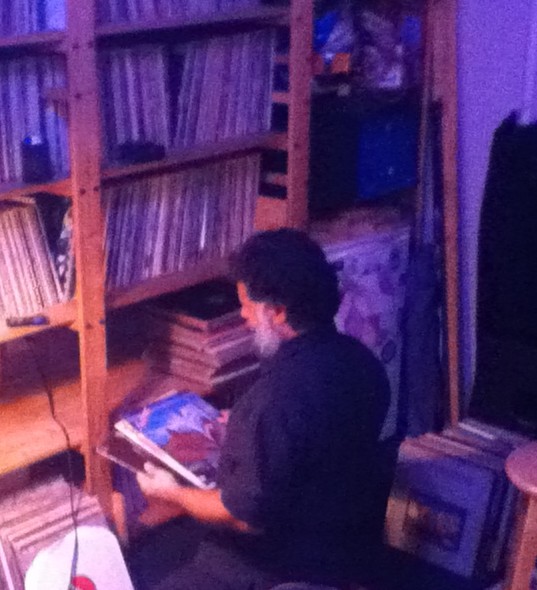
After reading this book I was also struck by how similar Nilsson’s life was to my dad’s, an interesting parallel to this review, since my dad initially turned me on to Nilsson’s music. He collected records, and one day around 1974 he came home with “Son of Schmilsson” and gleefully blasted “You’re Breaking My Heart” to our unsuspecting household, hilariously dropping the “F” bomb, blasting on his huge stereo. (“You’re breaking my heart, you’re tearing it apart, so F*#@ YOU.”) He laughed and laughed. My mother did NOT laugh.
I laughed too, which made my mom even less happy. My sister didn’t know what to do, but we both always remember that day. Later my dad and I went to Sam Goody’s looking for more Nilsson records. We picked up “Nilsson Schmilsson,” which I was amazed to discover contained “Without You” and “Coconut” which were very familiar from pop radio. We also got “A Little Touch of Schmilsson in the Night”- a collection of standards sung as well or better than the original artists- which my father simply adored. I have since given that album to several ‘older’ friends who have adored it as well.
In eighth grade a very hip teacher/friend turned me on to “The Point,” at which ‘point’ I became a Nilsson-o-phile, and during high school and college I collected nearly all of his albums. I bought “Duit on Mon-Dei” at the Woolworth’s in Bergenfield, NJ around 1979 for a couple of bucks, and was blown away by “Salmon Falls.” I recorded this album on an 8 track tape for my dad, but for him it was too rockish, and the Nilsson novelty had sort of worn off. My dad had become somewhat distant during the early 80’s, and he eventually split from my mom, leaving home for good in 1982.

During college my interest in Nilsson continued to expand. I distinctly remember finding “Aerial Ballet” at a funky vinyl store in Greenwich Village in 1985, and happily plunking down $10 for it, which at the time was a small fortune. No matter- Nilsson was IT. Meanwhile, my friends and the rest of the world said “Who?” I would then explain that Nilsson had sung the theme song to “The Courtship of Eddie’s Father,” and then they knew who he was. He re-worked the lyrics of his song called “Girlfriend” to “My Best Friend,” perfectly complementing the tv show’s story of a single father and his young son, a theme somewhat similar to Harry’s life story, and mine.
~
The book chronicles Nilsson’s somewhat sad life from his tough childhood in Brooklyn, his parents’ divorce and his subsequent hitchhiking trip to California, his exposure to singing and playing guitar by an uncle, and his eventual job working nights at a bank, while pitching his songs during the day and rarely sleeping. The Monkees covered one of his songs and he signed a contract with RCA Records in 1967 after making two low profile albums for smaller companies. His first RCA effort brought him to the attention of Derek Taylor, the Beatles’ publicist, who of course turned the Beatles on to Nilsson, bringing him national fame when John and Paul admitted in a 1968 press conference that Nilsson was their favorite ‘group.’
His first three albums were produced in a quaint, decidedly old time vaudeville and show tune style. He made three albums in 1970 which ended up being a turning ‘point’ in his career, as his next two albums were in large part hard, nasty and dirty rock and roll records, including his biggest album, “Nilsson Schmilsson.” This is the quintessential centerpiece of his career- exactly in the middle, denoting the moment he metamorphosed from a clean shaven, well groomed singer of genteel compositions to the bearded stoner in a bathrobe seen on the cover holding a hash pipe, with a full fledged rock and roll sound. It also contained his biggest hit, a cover of Badfinger’s “Without You,” a power ballad that is still played on pop radio today.

Instead of repeating the formula of this album, like its producer, Richard Perry, begged Nilsson to do, Harry instead chose to deliberately sabotage his next album and single by using the “F bomb” quite prominently, which was ironically the very reason that I was exposed to him in the first place.
The standards album is beautiful, a pinnacle of vocal achievement that to me ensures Nilsson an undisputed spot in a group of American singers such as Frank Sinatra, Eddie Cantor, and Bing Crosby- he really could sing as well as those guys. It was ahead of its time as a concept- years before Rod Stewart tapped into the geriatric market- but as a rock album in 1973 it sank without a trace, and further obscured him from the huge audience he could have been courting. Harry was right artistically, but it may have cost him his pop career, and led to his downslide with the help of booze and narcotics.
John Lennon produced Nilsson’s next album, “PussyCats,” and during the sessions it seems Harry did irreparable damage to his vocal cords. The album was somewhat high profile but did not produce any big hits. After this “Duit On Mon Dei” cemented Harry’s tendency to make bright, quirky music with a great studio band, a big budget, no commercial potential, and again, no hits. By 1978, RCA dropped him, a huge blow to his ego and well being. He eventually recorded one more album for Mercury in 1980, but it wasn’t even released in the U.S. Despite a large and happy family and marriage (his second) he continued drinking and drugging and died relatively young, at 53 in 1994.
~
My dad’s life had a similarly tragic downslide, aided by gin martinis, regret and debt. He stepped out of my life on his own terms and for his own reasons, just like Harry stepped out of the spotlight. I never could quite get our relationship back to the way it had once been, although whenever I visited him I would pull out and play some of his records, which always included “A Little Touch of Schmilsson in the Night.”
Nowadays I sing “Making Whoopee” as a tribute to Harry, my dad, and to those days.
If you’re not familiar with Nilsson, and you want to experience his essence in one song, go listen to “1941.” It not only tells his own life story, but gives proof why he’s considered one of the finest singers of this or any era.

 Jeff Sanchez - Words and Music