Save The Country, Laura Nyro

Recent events have made me reach for this song once again.  There’s so much to say about what happened on 1/6/21, but sometimes it’s better to say less.  ‘Save The Country’ was written during the summer of 1968, another terrible, turbulent time that was a low point in American history- assassinations, riots, and social unrest.

Laura Nyro is an almost unknown American songwriter, who has written many well-known songs, covered by other artists.  This mix features FIVE different versions of Save the Country, as well as many well-known covers of her songs.  Many people do not prefer Laura’s versions of them- her voice tends to get to a place that makes some squirm, but the people who love her can’t get enough.  In any event you should check her stuff out!

The 5th Dimension covered her songs extensively in the 60’s and early 70’s, even bringing “Wedding Bell Blues” to the #1 spot on Billboard in 1969.  They were a group of African American singers whose versions of Laura’s songs sounded tamer than the originals.  In other words, and please forgive the generalities, Laura was a white girl who sang like a black woman, and the 5th Dimension are black folks who made her songs sound white.  That’s the essence of American music- when all those lines are blurred.

The essence of the American political experience is that we are all free to believe what we choose.  Instead of saying what I think, I’ll use the lyrics of Save the Country.

Laura performing ‘Save the Country’ live on television in 1969.

Come on, people, come on, children
Come on down to the glory river
Gonna wash you up and wash you down,
Gonna lay the devil down, gonna lay that devil down!

Come on, people! Come on, children!
There’s a king at the glory river
And the precious King, he loved the people to sing;
Babes in the blinkin’ sun!!
Sang ‘We Shall Overcome!’

I got fury in my soul, fury’s gonna take me to the glory goal
In my mind I can’t study war no more!
Save the people, save the children, save the country
Now!

Come on, people, come on, children
Come on down to the glory river
Gonna wash you up and wash you down
Gonna lay the devil down, gonna lay that devil down.

Come on people! Sons and mothers
Keep the dream of the two young brothers
Gonna take that dream and ride that dove…

We could build the dream with love, I know,
We could build a dream with love, children,
We could build the dream with love, oh people,
We could build the dream with love, I know,
We could build the dream with love!

I got fury(4X) in my soul
gonna take me to the glory goal
In my mind I can’t study war no more!
Save the people, save the children, save the country
NOW!!

Save the people, save the children, save the country
Come on down to the glory river!

Save the people, save the children, save the country Now!

  1. Save The Country- Rosanne Cash
  2. Save The Country- Laura Nyro (single version)
  3. Stoney End- Laura Nyro
  4. Stoney End- Barbra Streisand (#6, January, 1971)
  5. Wedding Bell Blues- Laura Nyro
  6. Wedding Bell Blues- The 5th Dimension (#1, November, 1969)
  7. Wedding Bell Blues- The Roches
  8. And When I Die- Laura Nyro
  9. And When I Die- Blood, Sweat & Tears (#2, November, 1969)
  10. When I Think of Laura Nyro- Jane Siberry
  11. Stoned Soul Picnic- Laura Nyro
  12. Stoned Soul Picnic- The 5th Dimension (#3, July, 1968)
  13. Eli’s Comin’- Three Dog Night (#10, November, 1969)
  14. Eli’s Comin’- Laura Nyro
  15. Time and Love- The 5th Dimension
  16. Time and Love- Laura Nyro
  17. Sweet Blindness- Laura Nyro 
  18. Sweet Blindness- The 5th Dimension (#13, November, 1968)
  19. Save The Country- The 5th Dimension
  20. Save The Country- Julie Driscoll, Brian Auger and the Trinity
  21. Save The Country- Laura Nyro (album version, lyrics above)
  22. And When I Die- Sweet Honey in the Rock 
  23. And When I Die- Alison Krauss and Jerry Douglas

For a great introduction to Laura’s albums, try Eli and the 13th Confession. If that works for you, you’ll like New York Tendaberry even more.

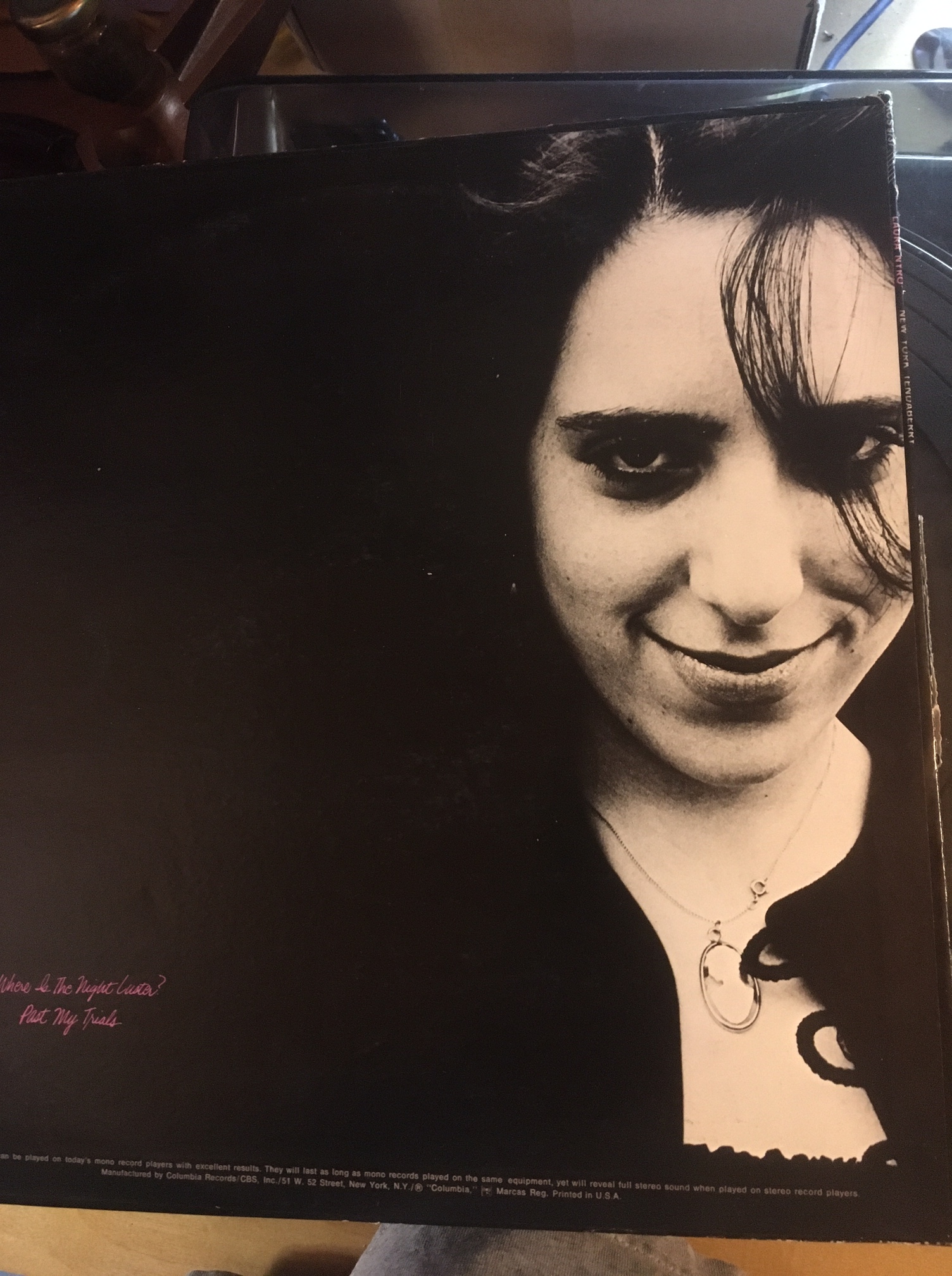
The back cover of ‘New York Tendaberry,’ the album that features Save the Country, from 1969.

Steve’s 45’s

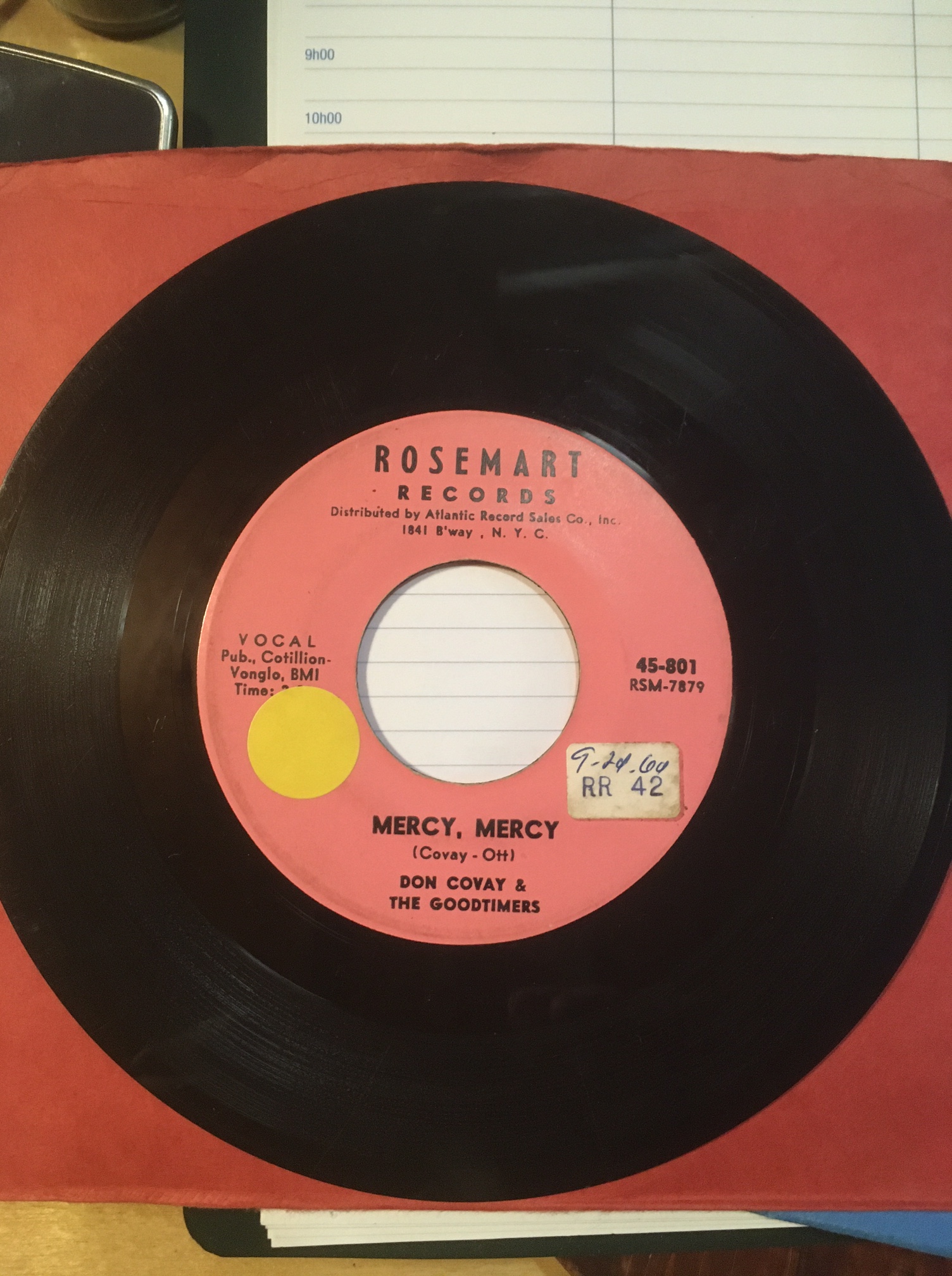
Back in April of 2020 my good friend Steve showed me some boxes of 45’s that had been his dad’s.  There’s nothing I like better than browsing through old records, and for the next hour or so I didn’t talk, except to occasionally get extremely excited by some of the titles- “WPLJ” by the Four Deuces, “Mercy, Mercy” by Don Covay and the Goodtimers, “Ooh Poo Pah Doo” by Jessie Hill- here were the original versions of songs I had heard years ago, covered by The Rolling Stones, Frank Zappa and Taj Mahal!  A treasure trove of songs.

I offered to rip them to mp3 and put them on cd so he could listen to them- not to mention so I could listen to them! This project took many months to complete.  I’m still not done, and that only includes the songs that I recognized.  There are also a TON of beach music singles by local groups like the Embers and the Fantastik Shakers, and those will be digitized soon.

These songs inspired me to make four different ‘cover’ mixes, where I put the original next to the cover.  Absolutely enlightening.  The Rolling Stones, The Beatles, Harry Nilsson, Leon Russell and many others have done covers of these songs.  Fun facts:  “Work With Me Annie,” which was banned for suggestive lyrics, is considered one of the first real examples of what became ‘rocknroll.’  Jimi Hendrix and Bernard Purdie play on “Mercy, Mercy.” “My Guy” was actually recorded before “My Girl.”  “Everlasting Love” has been covered multiple times, most famously by Carl Carlton in the 70’s.  The VAST majority of these formative and influential RnB and Motown songs were written and recorded by African American artists, and later covered by younger white rocknrollers.  I could list all the covers here- but why don’t you look them up?

In order to convey the essence of this find, I put together an 80 minute mix of all the high points for me, leaning towards the more obscure songs, in chronological order from 1948 to 1974.  Put THESE in your Spotify and smoke ‘em!

For the record, Steve’s dad’s name is Stephen Jolley, and he was a DJ during the 80’s.  Seems that many of these were in his private collection for many years before that- what immaculate taste!

  1. Fine Brown Frame- Nellie Lutcher, 1948
  2. Work With Me Annie- Hank Ballard and the Midnighters, 1954
  3. Annie Had A Baby- Hank Ballard and the Midnighters, 1954
  4. Roll With Me Henry- Etta James, 1955
  5. WPLJ- The Four Deuces, 1956
  6. Let the Good Times Roll- Shirley and Lee, 1956
  7. Young Blood- The Coasters, 1957
  8. Searchin’- The Coasters, 1957
  9. Stay- Maurice Williams, 1960
  10. Ooh Poo Pah Doo- Jessie Hill, 1960
  11. You Better Move On- Arthur Alexander, 1961
  12. Hey Baby- Bruce Channel, 1961
  13. Hitch Hike- Marvin Gaye, 1962
  14. Anna (Go to Him)- Arthur Alexander, 1962
  15. On Broadway- The Drifters, 1963
  16. The Monkey Time- Major Lance, 1963
  17. Harlem Shuffle- Bob and Earl, 1963
  18. My Guy- Mary Wells, 1964
  19. Mercy, Mercy- Don Covay and the Goodtimers, 1964
  20. My Girl- The Temptations, 1964
  21. Rescue Me- Fontella Bass, 1965
  22. Everlasting Love- Robert Knight, 1967
  23. Girl Watcher- The O’Kaysions, 1968
  24. More Today Than Yesterday- Spiral Staircase, 1969
  25. Band of Gold- Freda Payne, 1970
  26. Give Me Just A Little More Time- The Chairmen of the Board, 1970
  27. Treat Her Like A Lady- Cornelius Brothers and Sister Rose, 1971
  28. I’ll Be Around- The Spinners, 1972
  29. You Make Me Feel Brand New- The Stylistics, 1974
The original 45 of Mercy, Mercy by Don Covay and the Goodtimers. Famously covered by the Rolling Stones in 1965, this track features Jimi Hendrix on guitar and Bernard Purdie on drums.

#jeffsanchez, #therollingstones, #rocknroll, #hankballard, #ettajames, #thefourdeuces, #arthuralexander, #nellielutcher, #bobandearl, #doncovay, #marvingaye, #thetemptations, #majorlance, #robertknight, #brucechannel, #theo’kaysions, #spiralstaircase, #thedrifters, #thecoasters, #jessiehill, #fredapayne, #fontellabass, #marywells, #frankzappa, #thebeatles, #harrynilsson, #leonrussell, #tajmahal, #shirleyandlee, #steelydan, #jimihendrix, #bernardpurdie, #thespinners, #thestylistics, #thecorneliusbrothers, #thechairmenoftheboard

Saving the World, One Mix CD At A Time

As 2020 wound down, so did my last chance to get Spotify for $9.99 until the end of March.  I was tempted, but ultimately decided against it.  After all, as I said here earlier, I have my own private Pandora; I hate iTunes, and just yesterday finally resisted the sticky, cherry picking lure of Spotify.  The idea of having so much music at your fingertips is great, but I already have that without my phone.  I’d rather go on saving the world, one mix cd at a time.

I haven’t written here for a while, and many things have changed.  Job life, band life, real life.  Musical obsessions have come and gone with nary a post.  But I find myself still pestering Monika with my latest observation about Bob Dylan or the Who, still cranking out cd mixes for my friends and desperately waiting for some kind of pat on the back, so I’m forcing myself back to this page to let it all out, and hopefully meet some like-minded readers.

Two years ago I met my biological uncle for the first time, and discovered that my deep need to share mix cd’s with my friends is somewhat genetic.  This was a revelation- up till then I figured it was just some weird habit I had picked up- a personal form of expression using other people’s words and music; a forum for minor historical study, and a new way of inhabiting albums as works of art.  

I was adopted, and have spent years searching for biological relatives.  Through sheer persistence I eventually did track down the story of my birth and the individuals who were responsible for me being here- some of it is depressing, and some of it is exceptionally joyful, but the main thing is that my newfound uncle is also obsessed with creating mix cd’s.  He was in the hospital recently, and called to tell me he was ok- but his main frustration was that his annual Christmas mix remained unfinished and unsent!  I can totally relate to that, and it’s hard to explain how it makes me feel.  

I have made mixes ever since the early 80’s, when I first owned my own stereo and cassette deck.  I have spent most of my free time either focusing on a new mix, listening to and revising a current one, or waiting with disappointment for a reaction to an old one.  I’ve spent over 10,000 hours doing it, easy.  So I’m getting to be an expert at it, and the time has come for me to put it out there.

I’ve made mixes for my mother, my father and my sister, as well as strangers I’ve met all over the world.  An old girlfriend of mine had amassed over 100 mixes that document that particular relationship over the course of 5 years or so.  There are other friends (musicians and just music fans alike) who still have and listen to cassettes that I made them over 30 years ago- many of them have buckets of tapes and cd’s that I painstakingly put together, listened to over and over and revised- and who still get mix cd’s from me now.  

As a New Year’s resolution, I’m going to start posting the playlists here, rather than joining the Spotify crowd.  I’m no music streaming expert, but it seems to me that Spotify is ruining music appreciation- I want people to really dig into old albums, and not just their favorite songs.  In general, it feels like having access to that much music on your cell phone forces you to cherry pick, and skim the surface. Not to mention the crappy sound, and the fact that the original artists get paid very little.

I’m not on any kind of crusade though-use Spotify if it works for you- but I am hereby offering to share my mixes as playlists, if you’re into that kind of thing, or preferably on a cd.  You’ll dig them!  I want to promote active listening, instead of passive.  Find a way to listen for at least 80 minutes without interruptions- hook up your cd player- send me your address, and I’ll send you some.

Here’s one I made just for myself.  I have developed a knack for using an album as the basis for a mix, and this one uses Bob Dylan’s recent album “Rough and Rowdy Ways.”  It’s also sort of a post pandemic ode to better things in 2021, and an illumination of the many song titles Bob mentions in the song “Murder Most Foul.”

Jeff’s 2021 Mix, Volume 1:

  1. I Contain Multitudes
  2. 1921- The Who
  3. Night By Night- Steely Dan
  4. False Prophet
  5. The Seeker- The Who
  6. The Devil’s Been Busy- Traveling Wilburys
  7. Ramble Tamble- Creedence Clearwater Revival
  8. Smash the Mirror- The Who
  9. My Own Version of You
  10. Where Were You Last Night- Traveling Wilburys
  11. Photograph- Ringo Starr
  12. I’d Have You Anytime- George Harrison
  13. Goodbye Jimmy Reed
  14. Whistling Past the Graveyard- Tom Waits
  15. Black Beauty (solo piano version)- Duke Ellington
  16. Black Rider
  17. Black Napkins- Frank Zappa
  18. Nature Boy- Nat King Cole
  19. Crossing the Rubicon

Volume 2:

  1. I’ve Made Up My Mind to Give Myself to You
  2. Cry Me A River- Barbra Streisand
  3. Mystery Train- Elvis Presley
  4. Wake Up Little Suzie- The Everly Brothers
  5. I Want to Hold Your Hand- The Beatles
  6. Don’t Let Me Be Misunderstood- The Animals
  7. I’d Rather Go Blind- Etta James
  8. Mother of Muses
  9. Acid Queen- The Who
  10. Anything Goes- Harpers Bizarre
  11. Blue Sky- The Allman Brothers Band
  12. Lost My Driving Wheel- The Byrds
  13. Lonely At the Top- Randy Newman
  14. Take It to the Limit- The Eagles
  15. Tom Dooley- The Kingston Trio
  16. Murder Most Foul
  17. St. James Infirmary- Louis Armstrong
  18. Another One Bites the Dust- Queen
  19. Stella By Starlight- Bud Powell

Louis Armstrong: Master of Modernism by Thomas Brothers

I got an automated call from the library about two months ago, telling me that my book was available.  I hadn’t ordered any books, so I texted my wife to see what she took out under my library card this time.  She said it was for me, and when I got there I picked up a brand new copy of Thomas Brothers’ book, “Master of Modernism,” Brothers’ third tome on Louis Armstrong.  I hadn’t expected it, and I also had no idea how profoundly it would rock my musical world.

The book explains Armstrong’s early output, comprised of nearly 500 pages mostly devoted to the recordings made between the years 1924 and 1932, the records credited to Louis Armstrong and his Hot Five and later the Hot Seven.  It took me almost two months to read, which is an extremely long time for me-  I renewed it twice and even went two weeks overdue, definitely a first.  But now after listening to little else but Hot Fives and Sevens for two months, I understand why “Potato Head Blues” makes life worth living, according to Woody Allen, and why Billie Holiday was motivated to sing jazz after hearing “West End Blues.”

“Master of Modernism” combines the high and low much in the same way that Louis himself did.  He was able to transcend the ugly racism he was born into and become an architect of a world renowned style of music, while never leaving the vernacular style of New Orleans jazz.   Brothers explains the cultural background of the early Armstrong recordings throughout the book, as well as the music theory of pieces like “Cornet Chop Suey” and “West End Blues,” while at the same time giving his own personal opinion in short asides that make his scholarly book immensely readable.

I could list every Hot Fives and Sevens tune and why each is singularly important, but that would be a book in and of itself.  However, I do strongly urge you to listen to them all and see what happens.  You’d hear that “Muskrat Ramble” seems to be the basis of Country Joe’s “Feel Like I’m Fixin’ to Die Rag” and that The Rooftop Singers’ version of “Walk Right In” has nearly the same progression as “That’s When I’ll Come Back to You.”  Louis recorded “St. James Infirmary”,” Ain’t Misbehavin’, “Just a Gigolo” and “Ain’t Got Nobody” long before anyone else did, and so these recordings contain roots of blues, jazz, rock and roll, folk and pop.  In other words, in terms of American music, most roads lead back to Pops.  This book explains this and much more.

The Hot Fives and Sevens recordings span from 1925 to 1929, and the earliest ones were recorded directly on to vinyl via a giant cone.  They were only able to capture very little bass response, even with tuba.  Towards 1929 microphones had been developed, and an upright bass is added to very modern effect.

One of the most important things to realize about this early jazz music is that it is mostly blues.  Louis is sculpting and choreographing blues in an intelligent way with interesting composition and melody, influenced by classical music by way of his second wife Lil, an accomplished pianist and part of the Fives and Sevens.  It is modern, in that it remains ahead of its time and perhaps unequaled.  The fact that ‘race records’ could become the Rosetta Stone of jazz, giving America one of its proudest cultural heritages, is a testament to the width and breadth of America and the nation’s ability to heal its own wounds, but mostly to the will and determination of one African-American man.

I feel that a selected group of tunes from the Hot Fives and Sevens is indispensable to anyone who is interested in the history of American music, and so I pulled out 26 tracks based on Brothers’ explanations and my own musical taste, just enough to fit tightly on an 80 minute cd. 

Here is a link to them on dropbox- and a short word or two about each will follow.

https://www.dropbox.com/sh/c809ema6xwj2dh9/AAD9FVraSqOGQGTcwWs2SJHga

1.  Cornet Chop Suey– This seems to be Louis’s first serious composition, influenced by his first wife Lillian Hardin and her interest in classical music, which pushed him along in his early career.  While most of the jazz of the time featured trombone, clarinet and cornet playing simultaneously, here Louis steps up as a composer and soloist.  Chop Suey was a delicacy, and Louis’s second favorite food.

Louis Armstrong And His Hot Five,Recorded  2-26-26.

2.   Muskrat Ramble– Country Joe was actually sued by Kid Ory’s estate for plagiarism for “Feel Like I’m Fixin’ to Die Rag,” which seems to follow Muskrat Ramble’s progression almost exactly.  Country Joe won the case, but only because it had been too long since the “Rag” was written.  Some say Louis allowed Kid Ory to claim the composition, and some say the tune is based on an older song anyway.

Louis Armstrong And His Hot Five,Recorded 2-26-26.

3.  Heebie Jeebies– An early vocal for Armstrong, this is the first recorded example of scat singing, which evidently occurred because the lyrics fell off his music stand!  This song was also a big hit, and many who bought the record in New Orleans were familiar with scatting, but didn’t expect to hear it on a 78 recorded way up north in Chicago.

Louis Armstrong And His Hot Five,Recorded 2-26-26.

4. The King of the Zulus– There are clear examples of blues, pop and even rock and roll in these songs, and in this song there is a link, however thin, to the music of Jamaica.  The title refers to a social club parade at Mardi Gras, and in 1949 Louis was officially named King of the Zulus.

Louis Armstrong And His Hot Five, Recorded 6-23-26.

5. Big Butter and Egg Man From Way Out West– This is an arcane reference to a man who now would be called a Sugar Daddy, a common situation between some of the white, affluent male audience members and black female performers in the Chicago clubs where Louis came to prominence.

Louis Armstrong And His Hot Five, Recorded 11-16-26.

6. Irish Black Bottom– Louis claimed to be a Baptist who always wore the Star of David and was good friends with the Pope.  He was acutely aware of race his whole life, and although he was accused of being an ‘Uncle Tom’ throughout the years, playing outrageously stereotyped characters in the early films he made, he was actually outspoken about civil rights.  This song finds him joking about being Irish.

Louis Armstrong And His Hot Five, Recorded 11-27-26.

7. Willie the Weeper– An instrumental version of a song about a drug addict, in the ‘vein’ of Minnie the Moocher.  Featuring Lonnie Johnson on guitar.

Louis Armstrong And His Hot Seven,Recorded  5-7-27.

8. Chicago Breakdown– Written by pianist Jelly Roll Morton, another New Orleans native, who claimed to have ‘invented’ jazz.

Louis Armstrong And His Stompers, Recorded 5-9-27.

9. Potato Head Blues– This could be the all time happiest piece of music ever, especially the clarinet and cornet solos.  In the film “Manhattan,” Isaac Davis says this song is one of the things that makes life worth living.  Brothers explains that this was the first recorded example of a band doing stops every eight bars during a solo.  I hear shades of Hank Williams’ Lovesick Blues.

Louis Armstrong And His Hot Seven, Recorded 5-10-27.

10. That’s When I’ll Come Back to You– A dead ringer for “Walk Right In” by the Rooftop Singers, or is it the other way around?  I get the feeling that Louis himself wouldn’t have minded all the ‘borrowing’ that has gone on with his recorded legacy- he often said that songs came along like street cars, and there was always another one.

Louis Armstrong And His Hot Seven, Recorded  5-14-27.

11.  Struttin’ with Some Barbecue– The title refers to walking down the street with a fine looking female companion, and not some ribs.

Louis Armstrong And His Hot Five, Recorded 12-9-27.

12.  Hotter Than That– An excellent example of Louis’s exquisite scatting, and some amazing call and response with Lonnie Johnson on guitar.  Wait for it- it starts about halfway through, after some exuberant clarinet.

Louis Armstrong And His Hot Five, Recorded 12-13-27.

13.  A Monday Date–  Ten seconds into the track, Louis stops Earl Hines, who has started playing by himself, to ask if he and the rest of the boys can join the jam.  He mentions Mrs. Serchey’s gin, which kept them all happy, and demonstrates how he got his nickname, by calling drummer Zutty Singleton “Pops.”  Singing in a higher register than normal, this is Louis the entertainer.

Louis Armstrong And His Hot Five, Recorded 6-27-28.

14.  West End Blues– Jazz and blues are holding hands here, and if nobody looks they might just kiss. Delightful, effortless scatting from Louis, outdoing Johnny Dodd’s clarinet by a mile.

Louis Armstrong And His Hot Five, Recorded 6-28-28.

15.  Basin Street Blues– Another fine example of the exact spot where jazz and blues meet.  Louis’ scatting, and Hines’ tasteful accompaniment make this a classic.

Louis Armstrong And His Orchestra, Recorded 6-28-28.

16.  Heah Me Talkin’ To Ya– Somehow this track reminds me of “Peaches En Regalia,” “We Are Not Alone” and other horn based Frank Zappa instrumentals.  I’ve never read any FZ quotes about Louis, and his name is conspicuously not mentioned in the Freak Out list, but I would think that Frank dug the Hot Fives and Sevens.   Lumpy Gravy side one features a short section which sounds as if one of Louis’s 78 rpm records is being played even faster (cd 5:19 to 5:46) and side two features an even shorter section with a voice vaguely similar to Armstrong’s saying “Oh yeah, that’s just fine, come on boys, just one more time.” (cd 5:28 to 5:35)

Louis Armstrong and His Savoy Ballroom Five, arranged by Don Redman, Recorded  12-12-28.

17.  Weatherbird– A duet between Pops and Earl Hines, father of Gregory Hines, this shows the artistry and nearly equal talent the two man shared.  Earl split from Louis’ band shortly after these recordings were made, but eventually returned as part of Louis Armstrong’s All Stars in the 1940’s.  They were still musical equals, although eventually ego seemed to get between them, and the reunion didn’t last long.  Here they make a joyful noise that sounds like a precursor to bebop.

Louis Armstrong and Earl Hines, Recorded 12-5-28.

18.  Muggles– This exquisitely slow blues is a tribute to marijuana, or ‘Gage’, which Louis smoked almost daily from the mid 1920’s until just before his death in 1971. Trombone and clarinet set the tone, and then the drummer slips into double time for an economical and tasteful Louis solo that IS the blues.

Louis Armstrong and His Orchestra, Recorded 12-7-28.

19.  St. James Infirmary–  Well known in rock music, with covers by The Grateful Dead, The Doors, The Animals and recently The White Stripes, this song has a history as a folk ballad.  Louis turned it into a minor blues with Latin overtones in this definitive version.

Louis Armstrong and His Savoy Ballroom Five, Recorded 12-12-28.

20.  I Can’t Give You Anything But Love–  One of the first examples of the decision for Louis to record hits of the day,  which he did for the rest of his career, sometimes making sublime jazz versions of mundane compositions.

Louis Armstrong and His Savoy Ballroom Five, Recorded 3-5-29.

21.  Mahogany Hall Stomp– With better microphones, Louis was able to add bass and drums to his recordings, and here we begin to notice a sound that, while still deeply rooted in New Orleans jazz, is very close to early rock n roll.  Upright bass by Pops Foster, an old musical acquaintance from Fate Marable’s steamship band, which played up and down the Mississippi.

Louis Armstrong and His Savoy Ballroom Five, Recorded 3-5-29.

22.  Ain’t Misbehavin’– This is the beginning of American pop music, for me-  the idea of a black performer singing material that white audiences would appreciate- Louis was the original ‘crossover’ artist.  His solo here quotes Gershwin’s “Rhapsody in Blue.”  Leon Redbone later performed a very faithful cover  version on Saturday Night Live.

Louis Armstrong and His Orchestra, Recorded 7-22-29.

23.  When You’re Smiling– The instrumental version.  Many songs were done both as vocal and instrumental and were sold to ‘separate’ (white and black) audiences, a common policy of ‘race record’ companies.

Louis Armstrong and His Orchestra, Recorded 7-22-29.

24.  Ain’t Got Nobody– Louis Prima originally paired this tune with another that Armstrong recorded (Just A Gigolo), which became so popular that many think the two songs were composed as one.  ‘Diamond Dave’ (David Lee Roth) also updated the medley in 1985 and had a huge hit, in which he pays tribute to Pops’ gravelly voice and scatting style.

Louis Armstrong and His Orchestra, Recorded 12-10-29.

25.  St. Louis Blues– No one who has ever listened to Tom Waits can doubt the authenticity of this particular piece, which ends up sounding like Bill Haley and the Comets after a samba-like intro.

Louis Armstrong and His Orchestra, Recorded 12-13-29.

26.  Rockin’ Chair– This version features Hoagy Carmichael singing his own composition as a duet for the first time, which Pops later performed regularly with Jack Teagarden for many years.  The duet features a dialog between a father and son, which Jack and Louis enjoyed thoroughly.

Louis Armstrong and His Orchestra, Recorded 12-13-29.

My father’s record collection did not include any Louis Armstrong albums.  He liked Latin jazz, as played by Tito Puente and many other salsa and mambo artists, but aside from the odd Miles Davis or Stan Getz album he was never into ‘real’ jazz, or bebop either.  He was a huge Wes Montgomery and Errol Garner fan, and he told me years later that he liked ‘easy’ jazz.  (This was after I played drums with pianist Kent Glenn on a few dates that my dad attended- he was mystified that I had an interest in what he called ‘real’ jazz.)  So now looking back, it was interesting that my dad insisted we visit the Louis Armstrong House Museum when it opened in 2003 (he lived in Kew Gardens then.) Since that time I had it in the back of my mind that eventually I would investigate Louis’s music, and around 2006 I tentatively downloaded some of the Fives and Sevens after hearing about them in Ken Burns’ Jazz documentary. 

But thanks to Monika ordering “Master of Modernism” by Thomas Brothers I have now embarked on my latest musical obsession-Louis Armstrong and His Hot Five, Seven, etc; represented by the 26 songs above, which I cannot recommend to everyone highly enough.
Harry Nilsson- The Story of A Singer Songwriter (a personal review)

Over this past summer I read Nilsson: The Life of A Singer Songwriter, which I had eagerly anticipated.

It’s the first full length bio of Harry Nilsson, a very underrated and virtually unknown recording artist from the late 1960’s and early seventies.  Written by Alyn Shipton, the book does indeed chronicle Nilsson’s entire life in detail, and yet after reading I feel like I’m not that much closer to really knowing the man.

This is perhaps not a failing of the book, but rather a quality of the person- a true Gemini:  While being one of the best contemporary vocalists in rock and roll, Nilsson remains an enigma.  He had several hits including two #1’s, but most of his albums fell by the wayside in terms of sales.  He is well known and respected by his peers, including the Beatles, and yet is best known for being Lennon’s drinking buddy during his lost weekend of 1974.  He was a perfectionist in the studio, carefully constructing layers of incredible vocal harmonies with his own voice, and yet he was also an alcoholic and heroin user who, while turning out memorable albums, also insisted on making poor career choices.

~

After reading this book I was also struck by how similar Nilsson’s life was to my dad’s, an interesting parallel to this review, since my dad initially turned me on to Nilsson’s music.  He collected records, and one day around 1974 he came home with “Son of Schmilsson” and gleefully blasted “You’re Breaking My Heart” to our unsuspecting household, hilariously dropping the “F” bomb, blasting on his huge stereo.  (“You’re breaking my heart, you’re tearing it apart, so F*#@ YOU.”)  He laughed and laughed.   My mother did NOT laugh.

I laughed too, which made my mom even less happy.   My sister didn’t know what to do, but we both always remember that day.   Later my dad and I went to Sam Goody’s looking for more Nilsson records.  We picked up “Nilsson Schmilsson,” which I was amazed to discover contained “Without You” and “Coconut” which were very familiar from pop radio.  We also got “A Little Touch of Schmilsson in the Night”- a collection of standards sung as well or better than the original artists- which my father simply adored.  I have since given that album to several ‘older’ friends who have adored it as well.

In eighth grade a very hip teacher/friend turned me on to “The Point,” at which ‘point’ I became a Nilsson-o-phile, and during high school and college I collected nearly all of his albums.  I bought “Duit on Mon-Dei” at the Woolworth’s in Bergenfield, NJ around 1979 for a couple of bucks, and was blown away by “Salmon Falls.”  I recorded this album on an 8 track tape for my dad, but for him it was too rockish, and the Nilsson novelty had sort of worn off.   My dad had become somewhat distant during the early 80’s, and he eventually split from my mom, leaving home for good in 1982.

Image

During college my interest in Nilsson continued to expand.   I distinctly remember finding “Aerial Ballet” at a funky vinyl store in Greenwich Village in 1985, and happily plunking down $10 for it, which at the time was a small fortune.  No matter- Nilsson was IT.  Meanwhile, my friends and the rest of the world said “Who?”  I would then explain that Nilsson had sung the theme song to “The Courtship of Eddie’s Father,” and then they knew who he was.  He re-worked the lyrics of his song called “Girlfriend” to “My Best Friend,” perfectly complementing the tv show’s story of a single father and his young son, a theme somewhat similar to Harry’s life story, and mine.

~

The book chronicles Nilsson’s somewhat sad life from his tough childhood in Brooklyn, his parents’ divorce and his subsequent hitchhiking trip to California, his exposure to singing and playing guitar by an uncle, and his eventual job working nights at a bank, while pitching his songs during the day and rarely sleeping.  The Monkees covered one of his songs and he signed a contract with RCA Records in 1967 after making two low profile albums for smaller companies.  His first RCA effort brought him to the attention of Derek Taylor, the Beatles’ publicist, who of course turned the Beatles on to Nilsson, bringing him national fame when John and Paul admitted in a 1968 press conference that Nilsson was their favorite ‘group.’

His first three albums were produced in a quaint, decidedly old time vaudeville and show tune style.  He made three albums in 1970 which ended up being a turning ‘point’ in his career, as his next two albums were in large part hard, nasty and dirty rock and roll records, including his biggest album, “Nilsson Schmilsson.”  This is the quintessential centerpiece of his career- exactly in the middle, denoting the moment he metamorphosed from a clean shaven, well groomed singer of genteel compositions to the bearded stoner in a bathrobe seen on the cover holding a hash pipe, with a full fledged rock and roll sound.  It also contained his biggest hit, a cover of Badfinger’s “Without You,” a power ballad that is still played on pop radio today.

Image                       

Instead of repeating the formula of this album, like its producer, Richard Perry, begged Nilsson to do, Harry instead chose to deliberately sabotage his next album and single by using the “F bomb” quite prominently, which was ironically the very reason that I was exposed to him in the first place.

The standards album is beautiful, a pinnacle of vocal achievement that to me ensures Nilsson an undisputed spot in a group of American singers such as Frank Sinatra, Eddie Cantor, and Bing Crosby- he really could sing as well as those guys.  It was ahead of its time as a concept- years before Rod Stewart tapped into the geriatric market- but as a rock album in 1973 it sank without a trace, and further obscured him from the huge audience he could have been courting.   Harry was right artistically, but it may have cost him his pop career, and led to his downslide with the help of booze and narcotics.

John Lennon produced Nilsson’s next album, “PussyCats,” and during the sessions it seems Harry did irreparable damage to his vocal cords.  The album was somewhat high profile but did not produce any  big hits.  After this “Duit On Mon Dei” cemented Harry’s tendency to make bright, quirky music with a great studio band, a big budget, no commercial potential, and again, no hits.  By 1978, RCA dropped him, a huge blow to his ego and well being.  He eventually recorded one more album for Mercury in 1980, but it wasn’t even released in the U.S.  Despite a large and happy family and marriage (his second) he continued drinking and drugging and died relatively young, at 53 in 1994.

~

My dad’s life had a similarly tragic downslide, aided by gin martinis, regret and debt.  He stepped out of my life on his own terms and for his own reasons, just like Harry stepped out of the spotlight.  I never could quite get our relationship back to the way it had once been, although whenever I visited him I would pull out and play some  of his records, which always included “A Little Touch of Schmilsson in the Night.”

Nowadays I sing “Making Whoopee” as a tribute to Harry, my dad, and to those days.

If you’re not familiar with Nilsson, and you want to experience his essence in one song, go listen to “1941.”  It not only tells his own life story, but gives proof why he’s considered one of the finest singers of this or any era.   

Goodbye Yellow Brick Road, 40 years later

I read somewhere that this week is the 40th anniversary of the release of Goodbye Yellow Brick Road, which means I have been listening to records for 40 years.  I was seven in 1973, obsessed with AM and later FM radio, and this album made a huge impression on us all-myself, my friends, and their older brothers (who actually owned this album).  At that time Elton permeated pop radio, and I was still too young to have such a contemporary rock album, but I heard his songs while my mom drove me to school or when we drove to Florida for vacation, on the FM car radio; and especially at my friend John’s house in Dumont, gazing at his brother’s copy of Elton’s gigantic, amazing album cover.

The album cover itself.

The album cover itself.

This is one case where the cd is lovely, and sounds great, but it can never recreate the impact of the album cover itself- staring at it on your bed for hours, or like we did at John’s house, on the table in the middle of the one bedroom that four boys shared, with bunk beds in each corner. It just reeked of adolescence, sex, and bursting into adulthood; with rock n roll on the radio and the jukebox. Me and John would sit and look at the cover and listen to the record and wonder what real girls were like, aside from his brothers’ girlfriends. Punk goddesses, like Bennie? Tragically sad and beautiful like Marilyn, or confident like your funky, sophisticated older sister? I still remember being entranced by the sweet painted lady, the dirty little girl, and wondering why all the young girls loved Alice… We wondered about Danny Bailey, Roy Rogers, Jamaica Jerk offs and social diseases, and Elton swigging from a whiskey bottle; we were amazed by this album, and its cover.

The 30th anniversary cd booklet does present each song’s lyrics with the corresponding image from the cover, and digging it in that format is different- each song is sliced off into cd booklet size pages, where before it was this amazing monstrosity that was bigger than you were. Simply put, the vinyl album cover is really the only way to fully enjoy the original artwork. Go get your copy and look at it! For those of you born too late, go get a vinyl copy! You’ll soon fetish it! For those of you with a vinyl copy and a turntable… you know what to do.
And if you had the singles, then the B sides were mostly extras. So if you had “Saturday Night’s Alright for Fighting” as a 45, then you had “Jack Rabbit” AND “Whenever You’re Ready We’ll Go Steady Again” on the flip side. If you bought “Goodbye Yellow Brick Road” as a 45, like millions of other people did, then you got “Screw You (Young Man’s Blues)” as the B. These B sides are standout tracks from these sessions, and should not be missed. The B side for “Bennie and the Jets” was the album track “Harmony”, which actually went to number one in the U.S. as a separate entry; no wonder- it’s astonishing.

The effect of all 21 of these songs and the cover was staggering to me then as a 7 year old, and I’m still staggered today. This album taught me so much about life, and if I can say I’ve had a musical career, it started there in John’s room. I was so lucky to have encountered Goodbye Yellow Brick Road when I did, all those 40 years ago. It still gives me chills, challenges me, and fills me with memories of a more innocent time.
About six months after I first heard it, I asked my dad if I could get an album for my 8th birthday. He collected albums himself, so it was a no brainer. Of course I asked for Caribou, then Elton’s newest album. I’ve never looked back.

Still staggered.

Still staggered.

KISS and Makeup to Breakup, No Regrets

So, I’ve been on break.  From writing in this blog, from running on the elliptical, from doing yardwork- three things I was doing pretty regularly there for a while.  There are several possible factors- the heavy rain in July and August had me almost depressed, Monika’s surgeries brought a radical transformation, and the Clams continue to play live more than usual.  I’ve also been going through a massive Kinks phase, and it seems the only thing I really DO feel like doing is listening to their music.

I’ve NOT been on a break from reading rock n roll memoirs.  Of course, because of the Kinks phase I recently read “X-Ray” and “Kink,” Ray and Dave Davies’ books respectively.

But in order to keep some continuity here I want to touch on the Peter Criss memoir, “Makeup to Breakup-My life in and out of KISS,”  which I had eagerly anticipated after reading Ace Frehley’s book, “No Regrets,”  last year.   Peter’s book, as I had expected, contains heartfelt, honest yet somewhat defensive response to Gene Simmons’ accusations in his book, “KISS and Makeup.”  Still with me?

Peter always seemed to be the most hard scrabble member of KISS, having grown up in a tough section of New York, escaping gang life through music.  At the time Paul and Gene recruited him for KISS, he was the most veteran musician, having played in at least a dozen bands before then, and having recorded at least a couple albums.  He even studied jazz drums with Gene Krupa, which is evident in Peter’s drumming, with his ‘ghost notes’ and jazz fills.  This, along with his distinctive raspy voice gives KISS a unique sound- Peter was arguably the best singer in KISS, although his drumming isn’t quite as definitive as Ace’s solos.

Neither Ace’s or Peter’s books are as definitive as Gene’s, who although crass and opinionated is obviously the least burned out, and probably the most educated.  I listened back to their music about a year ago, when I read Ace’s book, and the albums with the original band still rock.  Ace’s solos are awesome-I can remember them all note for note.  His solos make even their weaker songs crackle.   Gene Simmons obviously was the band’s driving force and his demon character permeates their image, lyrics and music.  Gene’s solo album is a delight, with as many different styles as songs.  It’s odd, but Paul Stanley’s songs (and his solo album for that matter) now strike me as the least interesting, even though many of his songs, like “I Want You” and “Love Gun” absolutely personify KISS for me.   I do not wait with baited breath for his inevitable book, (although I’ll read it as soon as it comes out.)

I was really looking forward to Peter’s book, since I always thought he was the most human of the band after the original lineup disintegrated, and I knew he would be pissed off about Gene’s book.  Mostly I was not disappointed, and I will say it’s required reading for any hardcore KISS fan, like I was from 1975 to 1980 or so.  His early life is interesting, and you get the sense that he was a family man for most of his career.  He was the only one who was married before he was in KISS, although there is no shortage of groupie stories here, which at times are entirely too graphic.  He also details his terrible cocaine addiction, which in addition to a bad car wreck he had in Los Angeles definitely contributed to him being the first of the original band members to leave.

Like Ace, at a certain point Peter felt he had lost himself to the Cat Man, KISS, makeup, cocaine, sex, alcohol, and all the pitfalls of rock stardom;  unlike Gene,  who reveled in being the Demon, and was basically a teetotaler all his life.  One of the funnier stories Peter tells is about when Gene ate hash brownies and spent hours with him on the phone acting uncharacteristically philosophical and profound.  When he sobered up a day or so later he swore he would never touch drugs again.  Peter also fills us in on the weird homeless person who impersonated him back in the 90’s as well as his battle with breast cancer.

I recommend “KISS: Behind the Mask”, their authorized biography, for more objective bios of Gene, Paul, Ace and Peter.KISS

Up Periscope

English: The Beatles Yellow Submarine Logo

English: The Beatles Yellow Submarine Logo (Photo credit: Wikipedia)

Yellow submarine replica (The Beatles Story)

Yellow submarine replica (The Beatles Story) (Photo credit: Wikipedia)

I’ve been meaning to blog for days, but with the constant demands of the Clams’ summer tour, working 40 hours a week, hosting out of town musicians and yardwork, I haven’t had a minute. I better keep up with this book review stuff- I read ’em faster than I can review ’em. Just started Peter Criss’s “Makeup to Breakup,” but that’s gonna have to wait.

Upon finishing “Inside the Yellow Submarine” by Dr. Robert Hieronimus I started “Up Periscope Yellow” by Al Brodax. It’s possible that Al wrote his book because he gets a bad rap in the former. Brodax is the guy who produced the cheesy Beatles cartoons- does anyone remember those?

The basic story of “Inside the Yellow Submarine” is that the Beatles had very little to do with the film- that the studio of animators who actually created the film are its unsung heroes, and that Brodax was a big shot American producer who didn’t care if the feature came out looking just like the cartoons. Maybe Al read this book and decided to write his own, sorta set the story straight?

The difference between the two books couldn’t be wider. “Inside” is obviously written by an obsessive fan, albeit a highly intelligent one, who not only tells the story of the film in the co-creators’ own words, but also goes into almost excruciating detail of every piece of Yellow Submarine merch. Evidently written a few years after the digitized re-release of the film, it also appears that the author spent almost 30 years obsessing over the movie and its memorabilia.

Brodax takes the high road and “Up Periscope Yellow” is a poetic memoir. He was keeping diaries at the time, and only fleshed them out slightly for this book, which makes some sections almost impenetrable, and yet highly enjoyable. The two books are based on the same facts, but many times it seems that they recount two different stories. Brodax says he and writer Erich Segal came up with the idea for the Blue Meanies, and Hieronimus quotes Heinz Edelmann taking the credit. Many differences like this point to Brodax writing his book in retaliation, but his is still more personal and original- after all, it was he who made the deal for “Yellow Submarine” to fulfill the Beatles’ 3 picture contract with United Artists.
Read both of these books for the full story, and again, WATCH THE MOVIE, the digitized re-release is out on dvd and it will knock your socks off.

Blog Etiquette

I’m just starting to get a feel for this, but I can already see what I DON’T want this blog to be.  I will post here when I have something to say, but not before.  I also will get the format down soon as well, i.e. putting the words by the pictures they belong with, etc.  Any helpful comments are appreciated.

I saw a sensitive artist’s blog post yesterday that exhausted me before the first sentence was done, and it was a million pages long.  Not that there’s anything wrong with that, but…

The Clams had a fantastic rehearsal last night, cos we got to do songs that have been on the periphery for a while.  We played 50 songs over the course of three gigs last weekend, so we got to see which songs haven’t been played in a while, if at all.  Good originals, and a couple groovy covers too.  As the guys were leaving it POURED down rain, and there was a fantastic lightning show too.  Is it ever gonna stop raining??

So if you’re “following” this blog, I hinted at some reviews of rock n roll books that I’ve read this year.  Gotta say, the most entertaining one was I AM OZZY.  Hilarious!  It was transcribed from tapes of Ozzy speaking, and so his English vernacular comes across very clearly- you can almost hear his accent!  And he is self deprecating and brutally honest about how stupid he can be, which is quite endearing.  Monika and I were both in tears reading parts of it.  I heard he’s back off the wagon…  I’d party with him.  Fun guy.  GREAT book.

As some of you may know, I tend to be a media magnet here in Wilmington.  Jude was on WHQR yesterday and when she mentioned to the host that she played with me Jemila was like “Oh, I know Jeff!”  Then this morning the Penguin played my desert island set- Peaches En Regalia, Changing of The Guards, and Walk On- a nice bunch of tunes to get up and go to work to.  So, I will toot my own horn here, I just won’t reach down into the depths of my soul, or whatever.

(How come there aren’t automatically tags for stuff??)